Security in Blockchain: How to Protect Digital Assets from Hacks
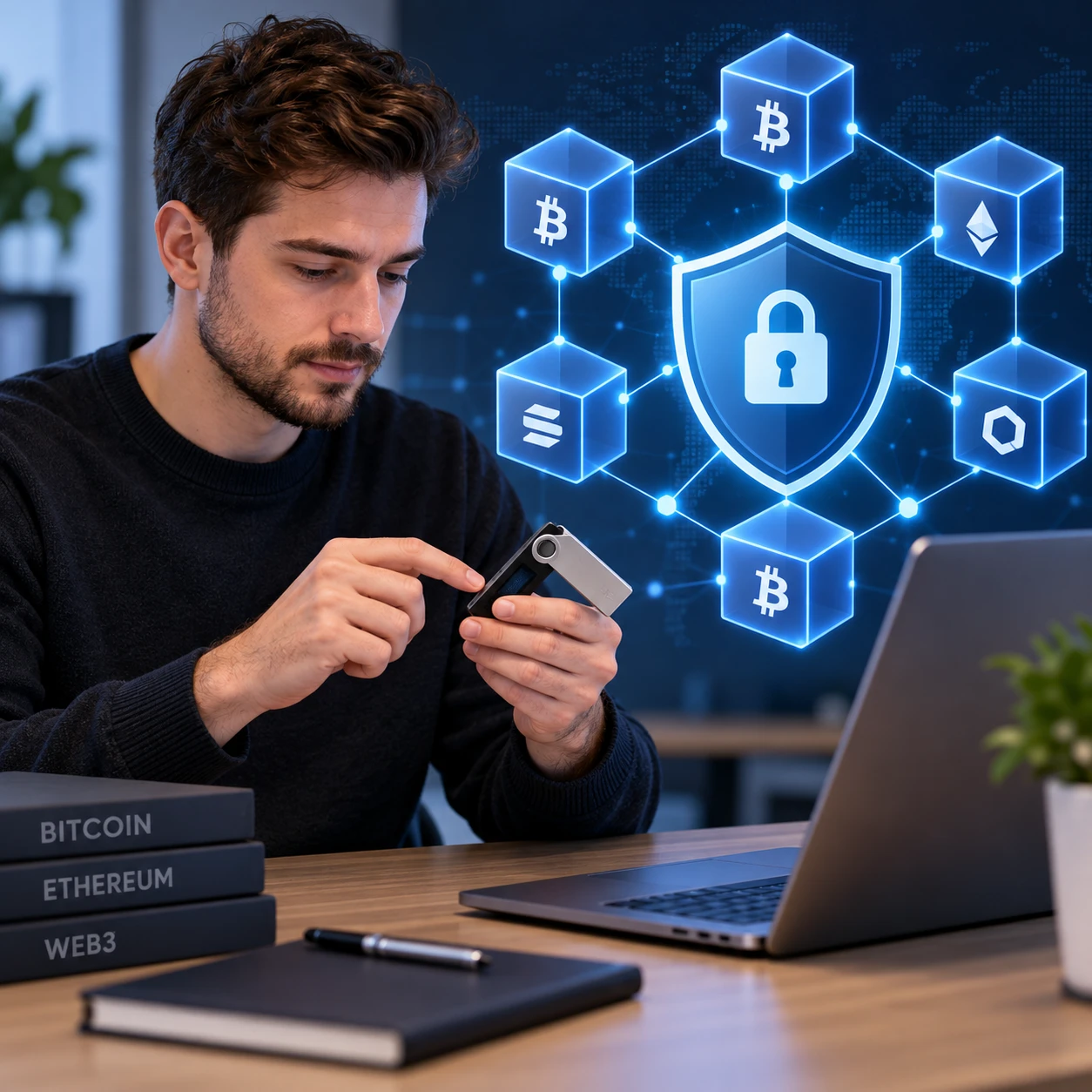
Blockchain security depends on more than the network beneath a cryptocurrency. Wallets, smart contracts, exchanges, custodians, and the people using them can each introduce risks. A strong network may protect its transaction history while a phishing message, exposed private key, or vulnerable application still puts assets in danger.
Understanding where those risks arise helps you choose safeguards that fit how you use crypto. The practical goal is to reduce the chance of unauthorized access, catch suspicious activity quickly, and avoid assuming any single tool can guarantee safety.
What blockchain security means
Blockchain security is the combined protection of a network, the applications connected to it, and the people and organizations that control digital assets. Each layer has different risks, so securing one layer does not automatically secure the others.
At the network level, blockchain protocols use mechanisms such as cryptographic signatures and consensus rules to validate transactions and maintain a shared ledger. These mechanisms can make unauthorized changes difficult, but they do not stop someone from tricking a user into signing a malicious transaction.
At the application and service levels, crypto wallets, decentralized applications, smart contracts, exchanges, and custodians handle access or assets in different ways. A flaw in a smart contract or a breach of an exchange can cause losses even if the underlying blockchain continues to operate as designed.
Users also have a direct role. A private key authorizes control over assets associated with it; whoever obtains the key may be able to move those assets. Security therefore includes protecting credentials, checking what a wallet is asking you to approve, and keeping recovery information private. Think in layers: network, application, platform, and user. A weakness in any one can matter.
Common threats to digital assets
Common threats to digital assets include phishing, stolen account credentials, compromised wallets, smart-contract vulnerabilities, and breaches at exchanges or custodians. Many incidents exploit a person or service rather than breaking the blockchain protocol itself.
- Phishing and social engineering: Scammers impersonate a wallet provider, exchange, project team, or support agent to persuade someone to reveal a seed phrase, share a login code, or approve a transaction. A legitimate support team should not need your recovery phrase.
- Stolen credentials: Reused or weak passwords, malware, and intercepted one-time codes can expose exchange accounts. Attackers may then change account settings or attempt withdrawals.
- Wallet compromises: A device infection, fake wallet app, unsafe browser extension, or exposed recovery phrase can give an attacker access. A wallet interface is a tool for managing keys, not a guarantee that the device is clean.
- Smart-contract vulnerabilities: Errors in contract code or unsafe integrations can enable unauthorized withdrawals or disrupt an application. Audits can identify some issues, but they cannot prove that software is free of defects.
- Platform breaches: Exchanges and custodians hold or manage assets for customers, making their security, internal controls, and withdrawal processes relevant. Users also face platform-specific risks such as account takeovers or service interruptions.
Be cautious with urgent messages, unexpected links, and requests to connect a wallet or sign a transaction. A signature can grant permissions or authorize actions, so read the wallet prompt rather than treating every approval as routine.
How blockchain security works—and where it can fail
Blockchain security uses cryptography and network rules to help verify transactions and protect the ledger, but it cannot secure every wallet, app, or service built around the network. The protocol and the tools people use on top of it are separate parts of the security picture.
When a user sends a transaction, a private key produces a digital signature that the network can verify. Nodes apply the blockchain’s rules to decide whether the transaction is valid and add accepted transactions to the ledger through the network’s consensus process. This process can protect transaction integrity without checking whether the user was deceived or whether a smart contract’s code behaves safely.
For example, a user might approve a harmful token permission after visiting a convincing fake site. The blockchain can process that validly signed instruction even though the user did not intend to grant broad access. Similarly, a vulnerable smart contract can execute according to its code while producing an outcome its developers did not want.
This distinction matters when assessing claims that a system is “secure.” Ask what is being secured: the consensus protocol, the wallet software, the smart contract, a company’s custody system, or the user’s account. Security controls lower risk, but no audit, hardware device, or authentication method makes every part of the chain invulnerable.
Best practices for protecting crypto assets
Protect crypto assets by safeguarding private keys, using strong account security, choosing storage that fits your needs, and verifying each transaction before approval. These habits reduce common risks, though they cannot eliminate every threat.
Protect keys and recovery phrases
Never share a private key or seed phrase, and do not enter one into a website or form prompted by a message. Store recovery information offline in a place protected from theft, fire, and accidental disposal. Avoid keeping an unencrypted photo or document of it in cloud storage or email.
A hardware wallet keeps key operations isolated from an internet-connected computer in many common setups. It can reduce exposure to some malware, but it cannot protect you if you reveal the recovery phrase, approve a deceptive transaction, or buy a tampered device. Obtain hardware wallets directly from the manufacturer or an authorized seller, and follow the manufacturer’s setup guidance.
Choose storage and authentication deliberately
Cold storage means keeping keys offline, often with a hardware wallet or another offline setup. It can suit assets you do not need to access often, but recovery and backup procedures still matter. Keeping assets with an exchange may be more convenient for frequent trading, while requiring trust in that provider and its account controls. There is no single storage choice that suits every user.
For exchange accounts, use a unique password and enable multi-factor authentication (MFA). An authenticator app or hardware security key is generally preferable to relying only on SMS, which can be vulnerable to phone-number takeover. Set withdrawal protections and account alerts when the platform offers them.
Check before signing
- Confirm the website address and app publisher before connecting a wallet.
- Check the recipient address, network, amount, and fees before sending. For a new address or a large transfer, consider sending a small test amount first, while accounting for network fees and the possibility of irreversible transactions.
- Read token approval and signature prompts. Revoke permissions you no longer need using a trusted tool, and verify that the tool and network are correct.
- Keep devices and wallet software updated, and install updates only through official channels.
Security considerations for businesses and developers
Businesses and developers should combine secure software development, independent review, restricted access, and carefully managed custody. Each control addresses a different risk, and none is foolproof on its own.
Developers should use established libraries, test smart contracts for expected and adversarial behavior, and arrange independent security audits before deployment. An audit is a point-in-time review, not a guarantee: code may change afterward, and reviewers may miss issues. Testing, monitoring, a clear upgrade process, and a plan for pausing or limiting vulnerable functions can add useful layers.
Organizations should limit who can access production systems and treasury assets. Use role-based permissions, separate duties for sensitive actions, and require multiple authorized approvals for high-value transfers where practical. Protect administrator accounts with strong MFA, review access regularly, and prepare an incident-response plan that identifies decision-makers and communication channels.
Custody decisions deserve particular care. A company managing keys internally needs documented backup, recovery, and access procedures; using an external custodian shifts some operational responsibilities but introduces reliance on that provider. Evaluate how keys are controlled, how withdrawals are approved, what happens during an outage, and which assets or networks are supported. Choosing convenience may mean accepting provider or availability risks.
What to do after a suspected hack
If a wallet or account may be compromised, secure any access that remains, stop sharing information, and verify activity through trusted channels. Act carefully: rushed clicks or recovery services promising guaranteed refunds can lead to further losses.
- Secure affected accounts: From a device you believe is clean, change passwords for related email and exchange accounts, end active sessions where possible, and reset MFA if it may have been exposed. Contact the provider through its official app or a web address you type yourself.
- Protect remaining assets: If you suspect a key or seed phrase is exposed, do not keep using it. Create a new wallet on a trusted device and move remaining assets only after checking the destination and network. A compromised wallet may be monitored, so consider getting qualified help before making a transfer.
- Record what happened: Save transaction IDs, timestamps, wallet addresses, messages, and screenshots. Do not post recovery phrases, passwords, or one-time codes when seeking help.
- Report and verify: Notify the exchange or custodian using its official support process, and report the incident to appropriate local authorities where relevant. Check blockchain activity with a reputable block explorer, but remember that a public transaction record does not itself reverse a transfer.
Recovery is uncertain, especially for transactions confirmed on a public blockchain. Treat anyone who contacts you unsolicited and claims they can retrieve funds for an upfront payment as a serious warning sign.
Frequently asked questions about blockchain security
These answers clarify what blockchain security can and cannot do, and how to make safer choices when storing or using crypto.
Can a blockchain itself be hacked?
A blockchain can face attacks against its consensus, software, or network, but this differs from stealing assets through a wallet, smart contract, or exchange. The risk depends on the network’s design and conditions; no blockchain should be described as impossible to attack.
What is the safest way to store private keys?
For many people holding assets long term, an offline hardware wallet with a securely stored recovery backup can reduce online exposure. The safest setup also depends on your ability to protect and recover the backup. Losing it or disclosing it can be as serious as losing the device.
Does a hardware wallet prevent every kind of crypto theft?
No. A hardware wallet can help protect keys from some online attacks, but it cannot prevent phishing, unsafe approvals, physical coercion, or exposure of the recovery phrase. Review the transaction details shown on the device before confirming.
What should I do if I suspect my wallet is compromised?
Stop interacting with suspicious sites, secure related accounts from a trusted device, and move remaining assets to a newly created wallet if you can do so safely. Contact official support, preserve evidence, and avoid anyone promising guaranteed recovery.