Decentralized Finance (DeFi): How It Is Transforming Traditional Financial Systems
What Is Decentralized Finance (DeFi)?
Decentralized Finance, or DeFi, is an open financial system built on blockchain networks that allows anyone to access banking-like services — lending, borrowing, trading, earning interest — without relying on banks, brokers, or any central authority. Where traditional finance requires you to trust an institution, DeFi replaces that trust with transparent, publicly auditable code.
The contrast with conventional banking is stark. When you deposit money in a bank, that institution controls your funds, sets the terms, and can restrict access. DeFi flips that model: you retain custody of your assets through a non-custodial wallet, and interact directly with financial protocols through your internet connection. No account applications, no credit checks, no business hours.
This isn't a fringe experiment. By mid-2024, the DeFi ecosystem had accumulated hundreds of billions of dollars in assets under management across thousands of protocols — a figure tracked by a metric called Total Value Locked (TVL), which measures the total capital deposited into DeFi platforms at any given time.
The Blockchain Infrastructure Powering DeFi
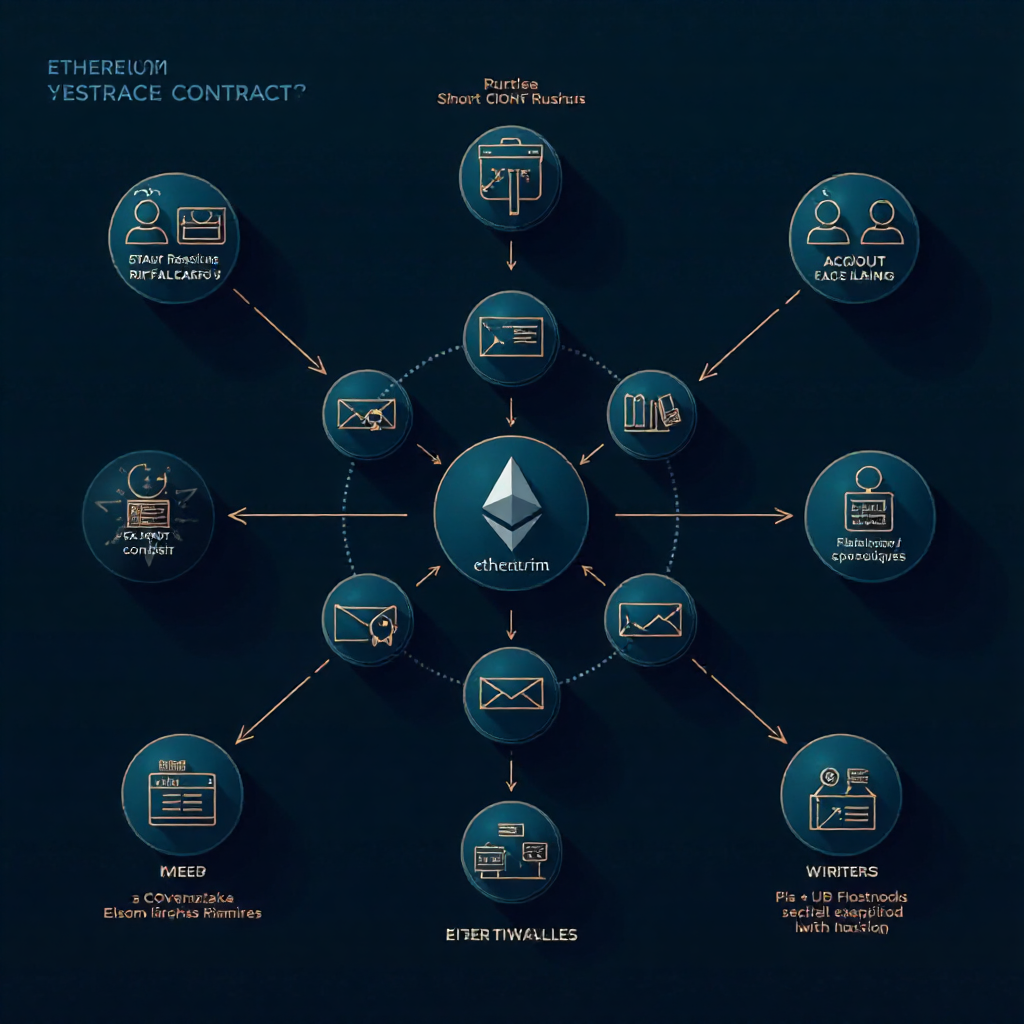
DeFi runs on blockchain networks, with Ethereum historically serving as the dominant infrastructure layer. A blockchain is a distributed ledger maintained by thousands of independent computers simultaneously, making it resistant to manipulation by any single party.
The engine behind every DeFi application is the smart contract — a piece of self-executing code deployed on a blockchain that automatically enforces the rules of an agreement when predefined conditions are met. Think of it as a vending machine: insert the right input, get the promised output, no human intermediary required.
This architecture has two profound implications. First, DeFi protocols are permissionless — anyone with a wallet and an internet connection can use them, regardless of geography or financial history. Second, they are trustless — you don't need to trust the company running the platform because the smart contract code is public, verifiable, and executes exactly as written.
Beyond Ethereum, networks like Solana, Avalanche, and Layer 2 solutions have expanded DeFi's capacity, reducing transaction fees and improving speed. But Ethereum remains the reference point, hosting the largest share of DeFi's TVL and the most battle-tested protocols.
Core Components of the DeFi Ecosystem
DeFi is not a single application — it's an interconnected ecosystem of financial primitives, each replacing a function that traditional finance assigns to institutions.
Decentralized Exchanges (DEXs)
Decentralized exchanges allow users to trade crypto assets directly with each other, without a centralized order book or custodian. Platforms operating on the Uniswap model use an automated market maker (AMM) mechanism, where prices are determined algorithmically based on asset ratios in a pool rather than matched buyers and sellers.
Liquidity Pools
DEXs and lending platforms depend on liquidity pools — smart contracts holding reserves of two or more tokens contributed by users called liquidity providers. These providers earn a share of trading fees in exchange for supplying capital. It's a peer-to-peer model that replaces the market-making function traditionally performed by large financial institutions.
Lending Protocols
Lending protocols let users deposit assets to earn interest or borrow against their crypto holdings as collateral — all governed by smart contracts, with interest rates adjusting dynamically based on supply and demand. There's no loan officer involved; the protocol enforces repayment terms automatically.
Stablecoins and Yield Mechanisms
Stablecoins — crypto assets pegged to fiat currencies like the US dollar — serve as DeFi's stable medium of exchange, shielding users from the volatility of assets like Bitcoin or Ethereum during transactions. Within this ecosystem, yield farming and staking offer ways to put idle assets to work: yield farming involves moving assets across protocols to maximize returns, while staking typically means locking assets to support a network's security in exchange for rewards.
How DeFi Challenges Traditional Financial Services
DeFi doesn't just replicate existing financial services — it restructures the underlying power dynamics. Traditional banks act as gatekeepers: they decide who qualifies for a loan, what interest rate you receive, and when you can access your money. DeFi removes the gatekeeper.
Consider lending. A conventional bank evaluates your credit score, employment history, and collateral before approving a loan — a process that can take days and excludes billions of people globally who lack formal credit histories. A DeFi lending protocol issues a loan in minutes, secured by on-chain collateral, with terms enforced automatically by smart contracts. No discrimination, no paperwork, no branch visit required.
Trading follows a similar pattern. Stock exchanges and forex markets operate within defined hours, require licensed brokers for certain asset classes, and charge layered fees. Decentralized exchanges run 24 hours a day, 365 days a year, with transactions settling in seconds and fees flowing to liquidity providers rather than corporate intermediaries.
Payments represent another front. Cross-border transfers through traditional banking can take 3-5 business days and cost 5-7% in fees. On-chain transfers using stablecoins settle in minutes for a fraction of the cost, regardless of whether sender and receiver are in the same city or on opposite sides of the planet.
Key Benefits and Real-World Use Cases
DeFi's most significant practical advantage is financial inclusion. Approximately 1.4 billion adults worldwide remain unbanked, according to World Bank data — many because they lack the documentation or proximity to physical bank branches that traditional finance requires. A smartphone and internet connection are the only prerequisites for accessing DeFi services.
Transparency is another structural benefit. Every transaction on a public blockchain is permanently recorded and auditable by anyone. This stands in sharp contrast to the opacity of traditional financial institutions, whose internal operations are largely invisible to customers and regulators alike.
Real-world use cases are already operating at scale:
- Remittances: Workers sending money home to family in developing countries use stablecoin transfers to avoid the high fees of services like Western Union.
- Savings and yield: Users in countries with high inflation park assets in DeFi lending protocols to earn yields that outpace local bank deposit rates.
- Programmable finance: Businesses use smart contracts to automate payroll, escrow, and revenue sharing without manual processing or third-party administrators.
- Collateralized borrowing: Crypto holders access liquidity without selling their assets, using them as collateral in lending protocols instead.
Risks, Limitations, and Regulatory Considerations
DeFi's benefits come with genuine risks that any honest assessment must address. The same smart contract that eliminates the need for trust in a counterparty can itself contain bugs — and unlike a bank error, a flaw in deployed code can be exploited irreversibly. Smart contract vulnerabilities have resulted in hundreds of millions of dollars in losses across various protocols.
Market volatility creates another layer of risk. If the value of collateral backing a loan drops sharply, automated liquidation mechanisms kick in — a process that can cascade across interconnected protocols during market stress, amplifying losses.
Liquidity risk is real too. Thin liquidity pools can cause significant price slippage on large trades, and liquidity providers face a phenomenon called impermanent loss when asset prices diverge significantly from when they deposited funds.
The regulatory landscape remains the most uncertain variable. Governments worldwide are still determining how to classify DeFi protocols — whether as financial services, software, or something entirely new. The EU's MiCA framework and ongoing SEC activity in the United States signal that regulatory clarity is coming, but the shape of that regulation will materially affect which DeFi services remain accessible in which jurisdictions. Compliance requirements around anti-money laundering (AML) and know-your-customer (KYC) rules present a particular tension with DeFi's permissionless ethos.
The Future of DeFi and Traditional Finance
The most likely near-term outcome isn't DeFi replacing traditional finance outright — it's a period of coexistence and selective integration. Major financial institutions are already experimenting with blockchain infrastructure for settlement, tokenized assets, and programmable compliance. JPMorgan's blockchain-based payment network and various central bank digital currency (CBDC) pilots reflect this trajectory.
Hybrid models are emerging where regulated entities interface with DeFi protocols, combining the compliance infrastructure of traditional finance with the efficiency and transparency of on-chain systems. This could expand DeFi's reach to institutional capital while bringing regulatory legitimacy to the ecosystem.
For the global financial system, the deeper significance of DeFi may be less about any specific protocol and more about what it proves: that financial services can be delivered through open, programmable infrastructure without requiring centralized intermediaries. Whether that potential is realized at scale depends on how the technical, regulatory, and adoption challenges of the next decade are resolved.
What's clear is that the conversation has shifted. DeFi is no longer a theoretical alternative to traditional finance — it's a functioning parallel system that millions of people use today, built on blockchain infrastructure that continues to mature.
Frequently Asked Questions
What is the difference between DeFi and CeFi (Centralized Finance)?
The core difference is custody and control. In CeFi — centralized finance — a company holds your assets and manages transactions on your behalf, much like a traditional bank. In DeFi, you retain control of your funds through a non-custodial wallet and interact directly with smart contracts. CeFi platforms typically offer more user-friendly interfaces and customer support, but require you to trust the platform operator. DeFi eliminates that trust requirement at the cost of greater personal responsibility.
Do I need technical knowledge to use DeFi platforms?
Basic DeFi use — connecting a wallet, swapping tokens on a DEX, or supplying assets to a lending protocol — requires no coding knowledge. However, understanding what you're doing matters: misunderstanding gas fees, slippage settings, or smart contract approvals can lead to costly mistakes. The learning curve is real, and starting with small amounts while you familiarize yourself with the mechanics is a practical approach.
Is DeFi safe, and what are the main risks involved?
DeFi carries distinct risks that don't exist in traditional banking. Smart contract bugs can be exploited, protocol governance can be manipulated, and market volatility can trigger rapid liquidations. Unlike bank deposits, DeFi assets are typically not insured. That said, risk varies significantly across protocols — audited, battle-tested platforms with years of operation carry different risk profiles than newly launched projects.
How is Total Value Locked (TVL) used to measure DeFi growth?
Total Value Locked represents the total dollar value of assets deposited into DeFi protocols at a given moment. It functions as a rough measure of ecosystem size and user confidence — when TVL rises, it generally indicates more capital flowing into DeFi; when it falls, capital is leaving. TVL has limitations as a metric (it's sensitive to asset price changes, not just new deposits), but it remains the most widely referenced indicator of DeFi's overall scale.
Can DeFi operate within existing financial regulations?
This is an active and unresolved question. Some DeFi applications — particularly those involving stablecoins or serving institutional users — are increasingly subject to regulatory requirements around KYC and AML compliance. Fully decentralized protocols with no identifiable operator present a harder regulatory challenge. The direction of travel, based on regulatory activity in the EU, US, and Asia, suggests that DeFi will face increasing compliance requirements, particularly for on-ramps and off-ramps connecting to traditional financial systems. For current regulatory developments, resources like the Bank for International Settlements provide ongoing analysis of crypto and DeFi policy globally.