Central Bank Digital Currencies (CBDCs): Opportunities and Challenges
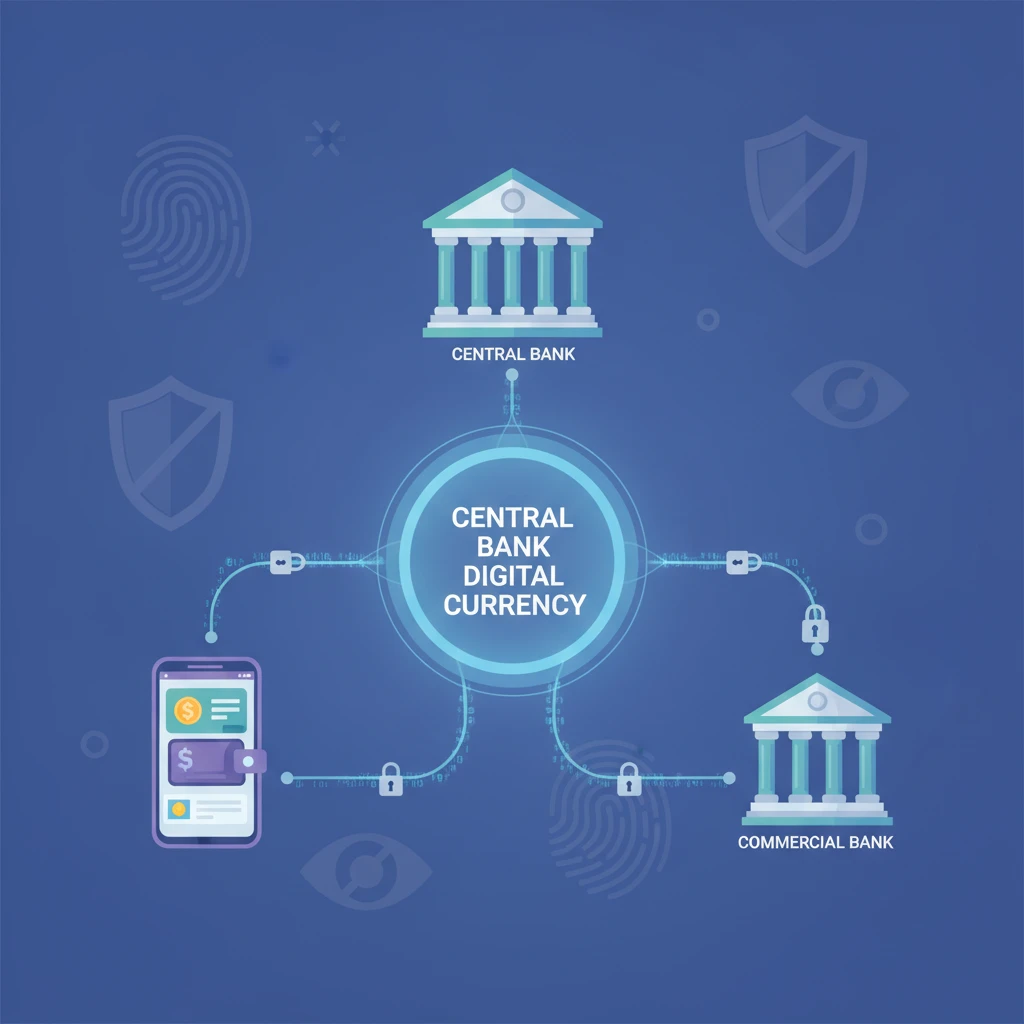
Central bank digital currencies, or CBDCs, are digital forms of a country’s official money issued by its central bank. They could make some payments faster or easier to access, but their effects depend on choices about privacy, technology, access, and the role of commercial banks.
What Is a CBDC?
A central bank digital currency is a digital payment instrument denominated in a national currency and issued as a liability of the central bank. Unlike a bank’s app balance, it represents a direct claim on the central bank, much like physical cash does.
CBDCs are usually discussed in two forms:
- Retail CBDC: Designed for use by the public, households, and businesses for everyday digital payments.
- Wholesale CBDC: Intended for financial institutions, such as banks, to settle payments and transactions with one another.
The distinction matters because the users and problems each form aims to address are different. A retail CBDC might be considered as a digital alternative or complement to cash. A wholesale CBDC could focus on settlement between financial institutions. Neither label, by itself, tells you what technology the system uses or whether the public can access it directly.
Central banks may explore CBDCs to respond to changing payment habits, support payment-system resilience, or study how digital money could work alongside existing forms of money. Research and proposals do not mean a CBDC has been approved or will be launched.
How CBDCs Differ from Cash, Bank Deposits, and Crypto
The main difference is who owes the money and how users access it. Cash is a central bank liability in physical form, bank deposits are claims on commercial banks, and cryptocurrencies are generally not liabilities of a central bank or a commercial bank.
- Cash: Physical central bank money that can usually be exchanged directly between people. It can work without an internet connection, though it is less convenient for many remote and online purchases.
- Bank deposits: Digital balances held at commercial banks and accessed through cards, transfers, or payment apps. They are widely used, but a deposit is a claim on the bank, subject to the rules and protections in that jurisdiction.
- CBDCs: Digital central bank money. Depending on the design, people might access it through a wallet or through an intermediary, such as a bank or payment provider.
- Cryptocurrencies: Digital assets that may rely on blockchain networks and are not typically issued or guaranteed by a central bank. Their prices and governance can differ sharply from national currency.
A CBDC is therefore not simply a government version of Bitcoin. A central bank would define the currency’s rules and value in the national unit of account. A CBDC might use distributed ledger technology, but it could also use a different database design. The label alone does not establish decentralization, anonymity, or price stability beyond its connection to the currency it represents.
Potential Opportunities of CBDCs
CBDCs could offer new ways to make and settle digital payments, but the benefits would depend on how the system is built and whether people and businesses choose to use it. The strongest proposals generally focus on access, resilience, and specific payment needs rather than assuming that a new currency automatically improves every transaction.
A retail CBDC might provide a digital way to hold central bank money, including for people who do not have a conventional bank account. That could support financial inclusion if wallets are affordable, easy to use, and available to people with limited connectivity or identification documents. If access requires a smartphone, reliable internet, or a complex onboarding process, those most in need could still be left out.
Other possible opportunities include:
- Digital payments: A shared public payment infrastructure could provide another route for person-to-person or merchant payments. Whether it is cheaper or faster than current services depends on fees, operating hours, interoperability, and adoption.
- Payment resilience: A system designed with suitable backup arrangements could offer another option when parts of the payment network are unavailable. Resilience requires tested recovery plans, not just a digital format.
- Public payments: Governments could use digital payment channels to distribute benefits or collect payments. This may make delivery more direct, while still requiring safeguards against errors, outages, and exclusion.
- Settlement innovation: A wholesale CBDC could be explored for financial-institution settlement, potentially alongside existing payment rails and market infrastructure.
These are possible design goals, not guaranteed outcomes. A CBDC has to solve a real problem better than available alternatives to justify its cost and complexity.
Key Challenges and Risks
The central challenges for CBDCs are protecting privacy and security, maintaining public trust, ensuring practical access, and avoiding disruption to commercial banks. Each risk depends on system design and governance, so proposals should be judged by their safeguards as well as their claimed benefits.
Privacy and data protection are central concerns. Digital payments create records, but the rules determine which entities can see them, how long information is retained, and when it can be disclosed. A CBDC does not have to reveal every transaction publicly; nor does calling a payment system digital make its data use harmless. People need clear limits, independent oversight, and a process to challenge misuse.
Cybersecurity is another major test. A central bank or its service providers would need to protect wallets, payment networks, identity systems, and recovery processes from fraud, outages, and attacks. Any system can fail, and a widely used payment instrument could become a high-value target. Offline use, where offered, also raises practical questions about limits, loss, and later reconciliation.
Access and public trust can falter if the system is difficult to use or if people fear that access to their money could be restricted without due process. Design must account for disability access, older devices, low connectivity, lost credentials, and customer support. Public consultation helps identify these issues before launch.
Finally, a retail CBDC could affect commercial banks. If households shift large sums from bank deposits into CBDC, banks might have less stable funding for lending. The scale of that effect is uncertain and would depend on adoption, holding limits, interest rules, and the availability of alternatives. A design that reduces one risk may add friction for users, so trade-offs need to be explicit.
CBDC Design Choices That Shape the Trade-Offs
CBDC design determines who can use the currency, who handles customer relationships, and how transactions are authorized. No single model is universal; each choice changes the balance among convenience, privacy, operational control, and financial-system impact.
Account-based and token-based access
In an account-based model, a payment is authorized by verifying the account holder or account credentials. In a token-based model, the system checks that a digital unit or token is valid. These terms describe different ways to verify transactions, but real systems may combine elements of both. Neither model automatically guarantees anonymity or prevents fraud.
Direct and intermediated models
In a direct model, the central bank may manage more of the relationship with users. In an intermediated model, commercial banks or payment providers handle services such as wallets, onboarding, and customer support, while the central bank issues the money. Intermediation can build on familiar providers, but it may leave the user experience dependent on those firms. A direct approach could give the central bank a larger operational role and require substantial customer-service and technology capacity.
When comparing proposals, ask how the model handles identity checks, transaction disputes, offline payments, wallet recovery, fees, and data access. Those details shape everyday experience more than a headline claim about blockchain or innovation.
What CBDCs Could Mean for the Financial System
CBDCs could change payment options and the relationship between central bank money and commercial bank money, but the scale of change would depend on design and adoption. A CBDC would not automatically replace existing payment networks, deposits, or cash.
For payments, a retail CBDC could add a public digital option alongside bank transfers, cards, and cash. That may encourage competition or provide another route for payment, though parallel systems can also add complexity. Merchants and users would need clear reasons to adopt it, plus reliable ways to move between CBDC wallets and bank accounts.
For monetary policy, a CBDC might affect how policy changes reach households and firms, particularly if its design includes interest. But interest-bearing digital central bank money could also influence where people keep funds and how banks finance lending. Non-interest-bearing designs may limit some of those effects, while offering fewer reasons to switch from existing payment methods.
Wholesale CBDCs may have different implications, focusing on settlement among financial institutions rather than everyday consumer payments. In either case, outcomes cannot be inferred from the technology alone. Legal rules, central bank mandates, banking arrangements, and public choices all matter.
How to Evaluate CBDC Developments
To assess a CBDC proposal, check its intended users, data rules, access requirements, and protections for funds before weighing claims about speed or innovation. A practical evaluation starts with the problem the project aims to solve, then tests whether the proposed design addresses it without creating larger risks.
- Who can use it? Check eligibility, identification requirements, wallet options, and whether people without smartphones or bank accounts can participate.
- What data is collected? Look for clear limits on access, retention, sharing, and legal disclosure, along with independent oversight.
- How are funds protected? Find out who is responsible for cybersecurity, fraud disputes, lost-device recovery, outages, and compensation where applicable.
- How does it fit with banks and payments? Ask whether users can move funds easily, what intermediaries do, and how the proposal addresses possible shifts in bank deposits.
- What is the evidence of need? Compare the stated goal with existing payment services and consider whether a less costly change could achieve it.
For a broad overview of central bank research and policy considerations, readers can consult the Bank for International Settlements’ CBDC topic resources. A careful proposal should explain its limits as plainly as its ambitions.
CBDC FAQs
How is a CBDC different from a cryptocurrency?
A CBDC is digital money issued by a central bank and denominated in the national currency. A cryptocurrency is generally not a central bank liability and may have a different issuer, governance model, and price behavior.
Would a CBDC replace cash or bank deposits?
Not necessarily. A CBDC could be designed to complement cash and bank deposits. Whether it changes how much people use either form would depend on access, features, rules, and public preference.
Can CBDC transactions be private?
Privacy depends on the system’s data and access rules. A CBDC can include safeguards that limit who sees transaction information, but it should not be assumed to offer cash-like anonymity. Users should review the proposal’s privacy protections and legal oversight.
Do CBDCs require blockchain technology?
No. A CBDC may use blockchain or another form of distributed ledger technology, but a central bank can also use conventional database systems. Technology choice is separate from questions about issuance, access, and governance.